
INTRODUCTION
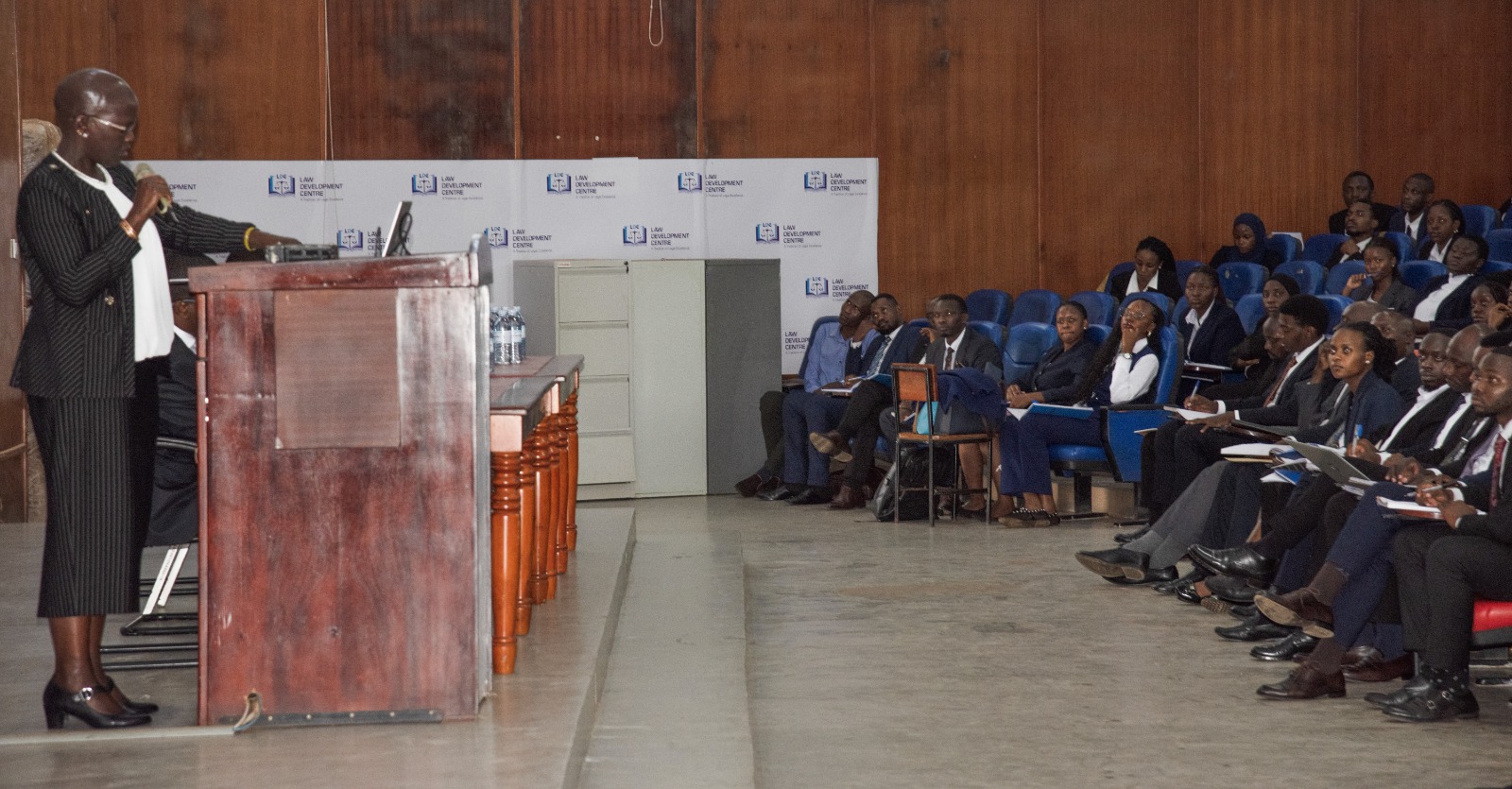
I want to begin by expressing my sincere appreciation to the Law Development Centre for inviting me to speak to you (Bar Course students) during your Civil Litigation Week.
The Law Development Centre occupies a special place in the legal profession in Uganda because it prepares the next generation of advocates, prosecutors, judicial officers and public servants who will carry forward the responsibility of administering justice in our country.
It is therefore always a pleasure to engage with students at this stage of their professional journey when your understanding of the law is evolving from theory into practice.

Today, I have been asked to speak on the topic “Alternative Dispute Resolution: The Quickest Dispute Resolution Mechanism in the Administration of Justice in Uganda.”
This topic is both timely and important, particularly in a justice system that continues to grapple with the challenges of case backlog and delayed justice, and when the Judiciary is also advocating for the use of Alternative Dispute Resolution Mechanisms.
- WHAT IS ALTERNATIVE DISPUTE RESOLUTION?
Alternative Dispute Resolution (ADR) refers to methods for settling conflicts outside of traditional, formal court litigation.
Historically, African societies resolved disputes through negotiation, mediation, reconciliation, and community participation. These mechanisms sought to restore social harmony rather than simply punish offenders.
ADR represents a partial return to indigenous justice principles that colonial legal systems displaced. What we now call ADR is, in many respects, African Dispute Resolution, while the adversarial trial system is the true “alternative” imposed through colonial legal frameworks.
One of the major expectations citizens have of the justice system is timely justice. When disputes take an excessively long time to resolve, several negative consequences arise.
First, public confidence in the justice system begins to decline. When litigants spend many years waiting for their cases to be concluded, they may begin to question the ability of courts to deliver justice.
Second, the cost of litigation increases significantly. Prolonged litigation involves legal fees, transport costs, and the opportunity cost of time lost while pursuing the matter.
Third, relationships between disputing parties deteriorate further. Litigation is inherently adversarial, and when it continues for many years, it may permanently damage relationships that might otherwise have been salvaged.
Finally, delays in dispute resolution can affect economic development. Commercial disputes that take many years to resolve may discourage investment and business growth.
For these reasons, the justice system must constantly seek mechanisms that enable disputes to be resolved more efficiently, more quickly, and more amicably.
It is in this context that Alternative Dispute Resolution, commonly referred to as ADR, has become an essential component of modern justice systems.

LEGAL AND REGULATORY FRAMEWORK GOVERNING ADR IN UGANDA
- The Constitution of the Republic of Uganda
Article 126 of the Constitution of the Republic of Uganda in the following authoritative terms:
- Judicial power is derived from the people and shall be exercised by the courts established under this Constitution in the name of the people and in conformity with the law and with the values, norms and aspirations of the people.
- In adjudicating cases of both a civil and criminal nature, the courts shall, subject to the law, apply the following principles—
- justice shall be done to all irrespective of their social or economic status;
- justice shall not be delayed;
- adequate compensation shall be awarded to victims of wrongs;
- reconciliation between parties shall be promoted; and
- substantive justice shall be administered without undue regard to technicalities.
These principles enjoin a requirement to embrace alternative forms of dispute resolution, including informal traditional justice mechanisms.
- Administration of the Judiciary Act 2020
This Act empowers the Chief Justice to constitute committees. One of the committees constituted is the committee on case management. To support the committee in its work, the ADR Registry was established. The ADR Registry is the national registry responsible for overseeing the implementation of ADR activities across the country, coordinating ADR activities and innovations.
- Arbitration and Conciliation Act
This is the governing law for private and commercial arbitration.
- The Judicature (Plea Bargain) Rules, 2016
Plea bargaining is a form of criminal ADR. The Plea Bargain Rules govern plea bargaining in criminal matters, providing procedures for negotiated guilty pleas to expedite resolutions, ensure voluntariness, victim participation, and judicial oversight.
- Judicature (Court Annexed Mediation) Rules, 2013
These are the current rules for mediation before the courts. Together with the Civil Procedure Rules, these rules allow courts to refer matters to mediation before a trial proceeds. There are new mediation rules in the offing. Currently in finalization, Judicature (Court Annexed Mediation) Rules, 2025 and seek to:
- provide a definition and scope of court-annexed mediation;
- provide for the effective oversight and administration of court-annexed mediation;
- provide for the roles of mediator, parties and advocates during court-annexed mediation;
- provide a framework of remuneration for court annexed mediators; and
- formalize accreditation standards for mediators, including 40 hours of training and continuous refresher courses.
3.5. The Judicature (Reconciliation) Rules, SI. No. 41/2011
The Judicature (Reconciliation) Rules, SI. No. 41/2011 in Uganda, empower courts to promote reconciliation and amicable settlements in specific criminal matters, aiming to restore harmony and reduce court backlogs. These rules apply to offenses such as simple assault, criminal trespass, child neglect, and theft.
- National ADR Policy
The National ADR Policy is a policy that reinforces access to justice under the national justice systems. It positions the potential of ADR to divert focus from litigation and, in effect, to complement and de-clog the court system. The policy also aims to localize justice and justice delivery, in terms of instilling an “ownership” principle, with the users of the ADR embracing it as their own in resolving their disputes.
The Uganda Cabinet approved the National Alternative Dispute Resolution (ADR) Policy in February 2025, aimed at reducing the massive case backlog in the judicial system.
- Alternative Justice Systems Strategy
ADR refers to alternative dispute resolution in its traditional sense in terms of arbitration, mediation, conciliation, etc. On the other hand, AJS refers to traditional, informal and other mechanisms used to access justice in Uganda.
The AJS strategy is framed and guided by the Judiciary’s strategic plan and judicial transformation agenda. The Strategy is meant to anchor and provide a broader reform towards a robust ADR framework and the Judiciary’s efforts to improve court processes and case management.
The objectives of the AJS strategy include among others; promoting, access to justice, case backlog reduction; support existing Judiciary ADR mechanisms; localize justice and justice delivery; establish a legal framework for all forms of ADR and reform of the existing ADR legal frameworks; and create a system that supports AJS to an extent that will encourage practitioners to develop relevant skills to enable them implement justice as understood by various stakeholders.
The strategy therefore intends to include more institutions and forms of ADR to ultimately optimize delivery of justice to all in Uganda.

- FORMS OF ADR IN UGANDA
4.1. Arbitration
Arbitration is a private, binding method of dispute resolution where parties submit disagreements to a neutral third party (arbitrator) instead of using public court litigation. It is a more formal ADR mechanism where parties submit their dispute to a neutral arbitrator or panel of arbitrators.
The arbitrator hears the evidence and arguments from both sides and then issues a binding decision known as an arbitral award.
Arbitration in Uganda is governed by the Arbitration and Conciliation Act which provides for domestic arbitration, international commercial arbitration and enforcement of foreign arbitral awards.
Arbitration is simply a matter of contract between the parties; it is a way to resolve those disputes, but only those disputes that the parties have agreed to submit to arbitration. The agreement is generally binding on the parties to the extent that they cannot proceed through the courts contrary to the terms of the agreement and/or without the consent of the other parties to that agreement.
An arbitration agreement is one where parties agree to settle all or certain disputes out of court, through the arbitration process and, it is possible to agree on almost any aspect of the arbitration process[1]. Sometimes it is agreed as part of a larger contract, or as a separate agreement. An agreement to arbitrate is usually reached before signing, by both or all parties involved.
Parties have to be aware that courts generally take a pro arbitration stand when dealing with arbitration agreements. So courts are likely to rely on an arbitration agreement that would ordinarily not pass the test in a normal contracts case.
Uganda’s Commercial Court is charged with consideration of applications to enforce or to set aside commercial arbitration awards and is the main source of the existing arbitration case law.
4.2. Mediation
Mediation in Uganda is a key Alternative Dispute Resolution (ADR) mechanism mandated by the Judicature (Mediation) Rules, 2013, designed to resolve civil, commercial, and family disputes quickly and cost-effectively.
Mediation involves a neutral third party known as a mediator who assists the parties in reaching a voluntary settlement.
The mediator does not impose a decision but facilitates dialogue and helps the parties identify common ground.
The procedure is simple; a neutral third party facilitates negotiations between the parties. If a settlement is reached, an agreement is reached and signed. If mediation fails, the case returns to the court process.
4.3. Conciliation
Conciliation is similar to mediation but the conciliator may take a more active role in proposing possible settlement terms.
The conciliator may evaluate the dispute and suggest solutions that the parties may consider adopting.
4.3. Reconciliation
The Constitution of Uganda enjoins Courts to promote reconciliation in criminal and civil matters.
Reconciliation is done through encouraging and facilitating settlement in an amicable way.
As discussed above, the Reconciliation Rules, encourage reconciliation in cases of assault, or for any other offences of a personal or private nature, not amounting to felony and not aggravated in degree, in terms of payment of compensation or other terms approved by the court, and may, thereupon, order the proceedings to be stayed.
4.4. Plea Bargaining
Plea Bargaining is a case backlog reduction intervention that the Judiciary of Uganda has developed and implemented since 2014. It is an ADR mechanism which has evolved in contemporary criminal justice. Plea bargain has been defined as the process between the accused person and the prosecution, in which the accused person agrees to plead guilty in exchange for an agreement by the prosecutor to drop one or more charges, reduce charge to a less serious offense, or recommend a particular sentence subject to approval by court.
The Process of Plea Bargaining under the Plea Bargaining (The Judicature (Plea Bargain) Rules, S. I. No. 43/2016).

4.5. Alternative Justice Systems
Alternative Justice System (AJS) refers to the informal justice system that is normally used in our communities in resolving disputes and this is anchored in the provisions of Article 126(2)(d) of the 1995 Constitution of Uganda.
Alternative Justice Systems are not mere alternatives; they are the foundation of societal harmony. They are systems rooted in indigenous traditions, cultural norms, and communal values, and encompasses mechanisms like elder councils, clan-based reconciliations, and religious arbitration that have resolved disputes for generations.
These systems emphasize restoration over retribution, consensus over confrontation, and healing over punishment. These principles that align seamlessly with the African philosophy of Ubuntu.
However, in an era of rapid urbanization, globalization, and complex legal challenges, we must evolve these systems to ensure they complement, rather than compete with, our formal judicial practices. A case in point is the Kanyamunyu case that demonstrates a clear balance between AJS and the formal justice systems.
This is precisely why Uganda’s AJS Strategy is so vital. It provides a roadmap for harmonizing informal justice with constitutional imperatives, reducing case backlogs, and extending justice to remote and marginalized communities.
Through AJS, we can divert appropriate matters, such as family disputes, land conflicts, and minor commercial disagreements, to community-led forums, freeing up judicial resources for more complex litigation. This approach not only expedites resolution but also enhances legitimacy, as decisions are rendered by trusted local figures in a language and context that resonates with the people.
4.6. Other forms of ADR in the criminal justice system
In Uganda’s contemporary criminal justice system, ADR takes several forms, including:
- compensation, in addition or as an alternative to imprisonment in criminal matters;
- involving victims and considering victim and society interests in determining appropriate sentences;
- diversion especially in relation to juvenile offenders;
- community service in minor offences; and
- Payment of fines especially in property related offences.
For ADR to achieve its full potential in criminal justice, it must be integrated into the system at the earliest possible stage. Treating ADR as a last resort after years of litigation defeats its purpose and undermines its efficiency.
At the pre-charge stage, diversion can occur before formal prosecution is initiated. Police-led cautioning, community mediation, and referrals to probation or local council structures can resolve minor disputes without criminalisation. This is appropriate for juveniles, first-time offenders, and minor offences where public interest does not demand formal prosecution.
At the pre-trial stage, ADR can also be effective. Once investigations are complete and evidence is available, parties can meaningfully engage in plea negotiations, reconciliation discussions, or compensation arrangements. Victims’ views can be considered, and realistic outcomes can be crafted. The Judicature (Plea Bargain) Rules, 2016 explicitly permit initiation of plea bargaining at any stage before sentencing, thereby encouraging flexibility.
At the trial stage, ADR also remains possible even after proceedings have commenced, provided no sentence has been passed. Courts may actively encourage parties to consider plea bargaining or reconciliation where appropriate, particularly in long-running trials where negotiated resolution better serves justice.
Police, prosecutors and Judicial officers play a proactive role in identifying ADR opportunities early, managing cases actively, and guiding parties toward lawful and constructive resolutions where feasible.
- EFFECTIVENESS OF ADR IN UGANDA
ADR has increasingly demonstrated its effectiveness in Uganda’s justice system by promoting faster resolution of disputes, reducing costs, easing the burden on courts, and fostering reconciliation within communities. Various ADR mechanisms including mediation, arbitration, negotiation, and plea bargaining have contributed significantly to improving access to justice and enhancing efficiency within the justice system.
5.1. Reduction in the Cost of Litigation
One of the most significant advantages of ADR is its ability to substantially reduce the cost of resolving disputes.
Trials often involve significant expenses including legal fees, administrative costs, and logistical expenses related to summoning witnesses and presenting evidence. ADR processes, by contrast, are generally less formal and require fewer procedural steps, which makes them more affordable for parties.
For example, in the criminal justice system, plea bargaining has significantly reduced the cost of criminal trials. It is estimated that the cost of conducting a full criminal trial in Uganda is approximately UGX 1,000,000. This cost includes various expenses such as legal representation for accused persons charged with capital offences, which the Constitution requires the State to provide.
Through plea bargaining, these costs are reduced by more than half because the case is resolved without the need for a full trial. Since its introduction in 2014, over 50,000 capital cases have been concluded through plea bargaining at the High Court, demonstrating the financial efficiency of this ADR mechanism.
Similarly, in civil matters, court-annexed mediation enables parties to reach settlements early in the litigation process, thereby saving legal costs associated with lengthy trials and appeals. In commercial disputes, arbitration also helps parties avoid prolonged court battles and the associated expenses.
5.2. Expeditious Resolution of Disputes
Another important measure of the effectiveness of ADR is its ability to facilitate quick resolution of disputes.
Traditional litigation can take several years to conclude due to procedural requirements, adjournments, and appeals. ADR processes, however, are designed to be faster and more flexible.
Plea bargaining has played a particularly important role in delivering quick and acceptable justice in criminal matters. Cases that might otherwise take years to conclude through full trial can be resolved in a much shorter period once the accused agrees to plead guilty under a negotiated agreement.
This has also helped in decongesting prisons, as cases are disposed of quickly and the status of accused persons is determined without prolonged periods on remand.
Similarly, court-annexed mediation in civil cases allows disputes to be settled within weeks rather than years. Many commercial disputes handled by the Commercial Division of the High Court are successfully resolved during mediation sessions, allowing parties to resume their business activities without the uncertainty of prolonged litigation.
5.3. Reduction of Case Backlog in Courts
ADR has also been highly effective in reducing case backlog within the judiciary.
When disputes are resolved through mediation, negotiation, arbitration, or plea bargaining, they do not proceed to full trial. This allows courts to dedicate their limited time and resources to cases that genuinely require judicial determination.
5.4. Efficient Use of Judicial and State Resources
ADR mechanisms also promote the efficient utilization of judicial and state resources.
Full court trials require significant logistical support including the presence of witnesses, interpreters, court clerks, prosecutors, defense lawyers, and sometimes expert witnesses. They may also involve forensic evidence, exhibits, and multiple court sessions.
Through plea bargaining, for example, once the accused pleads guilty, the court proceeds directly to sentencing without conducting a trial. This eliminates the need to summon witnesses, present exhibits, or conduct lengthy hearings.
5.5. Reduction of Emotional and Psychological Strain
Another important benefit of ADR is the reduction of emotional stress and psychological strain on the parties involved.
Litigation can be an extremely stressful process. Parties may be required to repeatedly attend court, relive traumatic experiences, and endure long periods of uncertainty regarding the outcome of their cases.
ADR provides a less adversarial environment where parties can openly discuss their grievances and work toward mutually acceptable solutions without the hostility often associated with courtroom litigation.
5.6. Promotion of Restorative Justice and Reconciliation
ADR also promotes restorative justice, which focuses on repairing harm and restoring relationships rather than simply punishing offenders.
Through mechanisms such as mediation and plea bargaining, victims are often given an opportunity to express how the offence has affected them and to participate in determining appropriate remedies.
In the context of plea bargaining, victims may be involved in discussions regarding the appropriate sentence or compensation. This allows them to feel that their concerns have been acknowledged and addressed.
Similarly, community-based ADR mechanisms under the Judiciary’s Alternative Justice Systems (AJS) strategy emphasize reconciliation, forgiveness, and restoration of harmony within communities.
In many Ugandan communities, disputes are resolved through dialogue facilitated by local leaders or elders, allowing parties to reconcile and restore social relationships.
5.7. Promotion of Community Healing and Reintegration
Finally, ADR contributes to community healing and reintegration of offenders.
When disputes are resolved through restorative mechanisms, offenders are more likely to accept responsibility for their actions and seek reconciliation with victims and the community.
For example, plea bargaining may involve a reduced sentence that encourages cooperation and acceptance of responsibility. This increases the likelihood that the offender will reintegrate successfully into society after serving the sentence.
Similarly, mediation processes in family and community disputes often allow parties to repair relationships and rebuild trust, which strengthens social cohesion.

- THE FUTURE OF ADR IN UGANDA
The future of ADR in Uganda is very promising. As future advocates, your role in promoting ADR will be extremely important.
Lawyers must recognize that their duty is not only to represent clients in court but also to advise clients on the most appropriate method of resolving disputes.
In many cases, the best service you can provide to a client is to help them avoid unnecessary litigation by exploring settlement options through ADR.
This requires lawyers to develop strong skills in negotiation, mediation and conflict resolution.
- CONCLUSION
Allow me to conclude by emphasizing that the ultimate purpose of the law is not simply to win cases but to resolve disputes and promote social harmony.
Alternative Dispute Resolution provides tools that enable the justice system to achieve this objective more effectively.
As you prepare to join the legal profession, I encourage you to embrace ADR not as an alternative of last resort, but as an essential part of modern legal practice.
If properly utilized, ADR will continue to play a crucial role in ensuring that justice in Uganda is accessible, efficient, and responsive to the needs of the people.
[1] Is an arbitration agreement binding?, Carlsons Solicitors at https://www.carlsonssolicitors.com/news/2020/11/26/is-an-arbitration-agreement-binding.
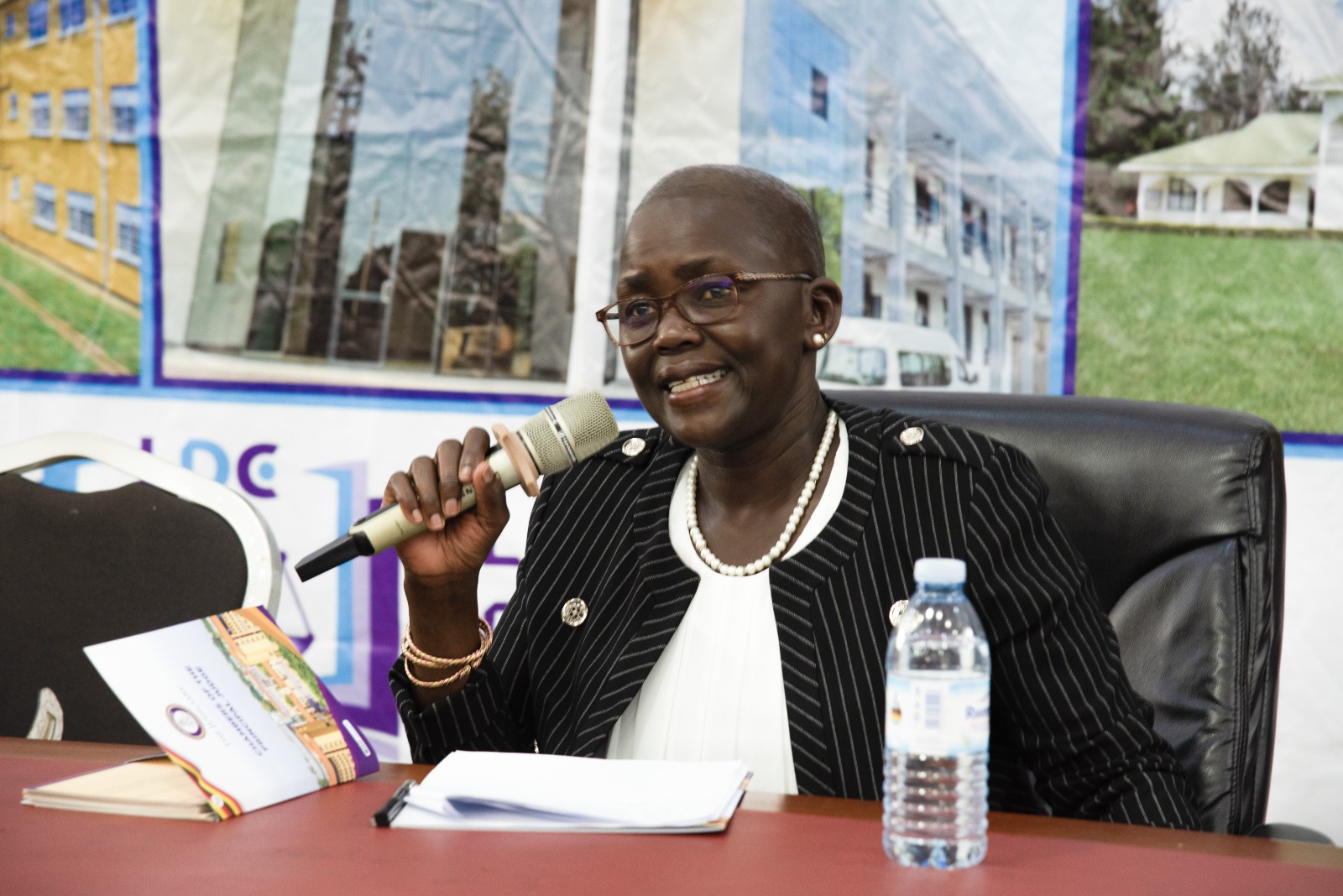
HON. LADY JUSTICE JANE FRANCES ABODO
PRINCIPAL JUDGE