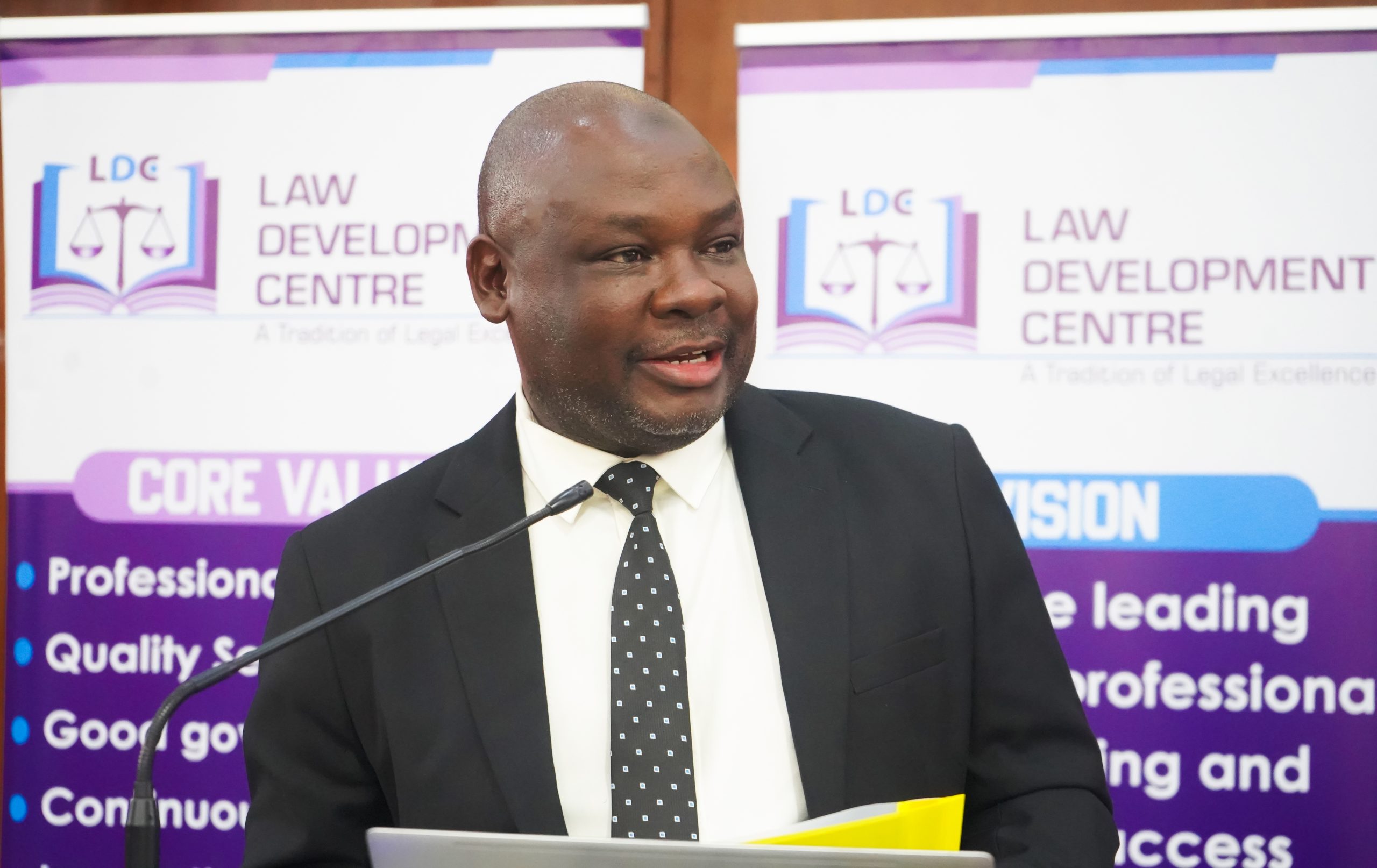
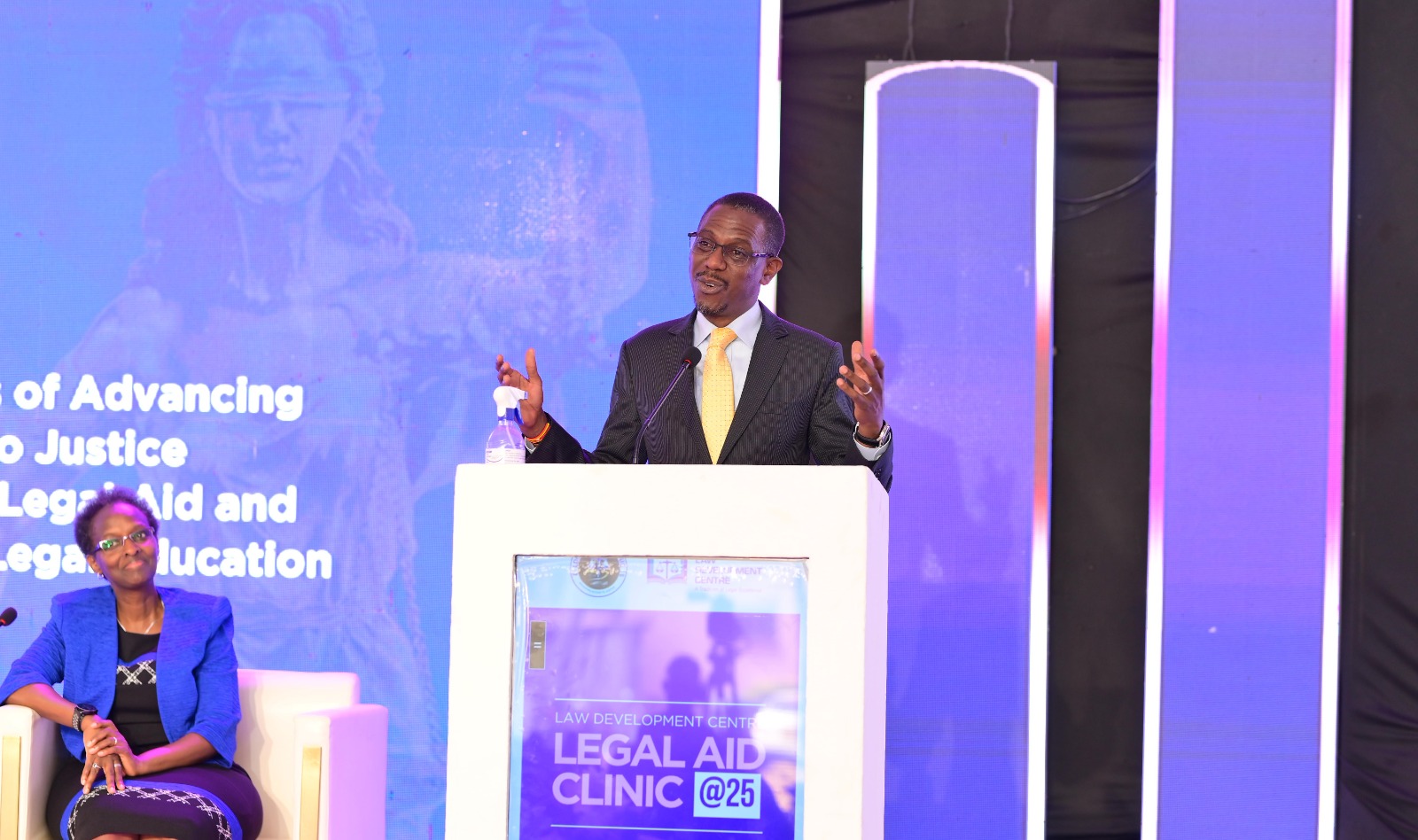
Today, we are here to celebrate Twenty-five years of the Legal Aid Clinic: Twenty-five years of advancing access to Justice through Legal Aid and Clinical Legal Education (CLE). This initiative has shaped both the careers and lives of many legal practitioners that have gone through the Law Development Centre (LDC), in particular Legal Aid Clinic and has impacted the lives of many.
The Legal Aid Clinic was founded in 1998 and started its activities in 1999, the vision was simple but powerful: to link service to learning and strengthen Uganda’s access to justice system.
I must say, I missed participating in the activities of the Legal Aid Clinic since the Clinic was launched two years or so after I had graduated from the Centre. As I stand before you and as we reflect on the achievements of the past twenty-five years, I cannot help but wonder how my cohort and others before us particularly those whose favorite part of the practice is taxation of costs and a hefty retainer, would have turned out, had we gone through this impactful programme.
What does the Legal Aid Clinic do?
The Clinic derives its mandate under section 3 (l) of the Law Development Centre Act, Cap. 251. In fulfilment of its mandate, the Clinic is implementing a number of projects that include supporting juveniles and petty offenders to access justice, running a reconciliation program at a number of Magistrates Courts and offering legal aid to indigent litigants and accused persons among others.
The Legal Aid Clinic was established with a mission to enhance access to justice through the provision of legal aid to indigent and accused persons, while building skills of upcoming lawyers under the CLE programme, linking service to learning and strengthening Uganda’s access to justice ecosystem.
Legal Aid is a bridge to justice for millions. Today we celebrate the LAC which makes it accessible. Legal Aid is not just a service, it’s a symbol of hope.
Achievements
Over the years, the Clinic has done more than any of us could have imagined. From a single office at the LDC in Kampala, it has expanded to satellite clinics across the country in Kabarole, Masindi, Adjumani and Jinja (2012) and later to the regional LDC campuses of Mbarara, Lira and Mbale (2018-2025) bringing legal services closer to communities that need them most and supporting the functionality of the criminal justice system through prison decongestion and case backlog clearance. The Legal Aid Clinic has moved from a One-man staffing to a staffing of forty-five.
Presently, over 10,000 indigents have received assistance through legal awareness, legal counselling and representation. This has facilitated the decongestion of prisons and contributed to case backlog clearance. Hundreds of students have gained practical training through the CLE programme, buttressed by the Advocates (Student Practice) Regulations, 2004, S. I. No. 70 of 2004 and the establishment of the Learning Court at LDC Kampala Campus, shaping both their skills as legal practitioners and their sense of professional duty. The “hard to reach” students programme, which allows communities and accused persons to access legal services is a reminder to students that legal practice is not merely a means to make money, as many often perceive it, but a tool for justice and service to the disadvantaged members of the community.
The Advocates (Legal Aid to Indigent Persons) Regulations, 2007, S.I. No. 12 of 2007 operationalizes and provides the benchmark for provision of legal aid services.
Challenges
The journey of providing legal aid has not been without its challenges. Limited funding and high demand for the Clinic’s services have often strained resources. I do however, commend the Clinic for the work that it has done despite these challenges, to turn ideals into action through its various pro-bono services such as reconciliation, plea bargaining and diversion programmes for juvenile offenders.
In providing these services, the Clinic has shown that access to justice is not just a promise, but a living reality. It has breathed life into Article 28 of the Constitution by ensuring that those who cannot afford to pay for the services of a lawyer, particularly the juvenile and the indigent, receive legal representation, in so doing upholding the right to a fair hearing and safeguarding access to justice.
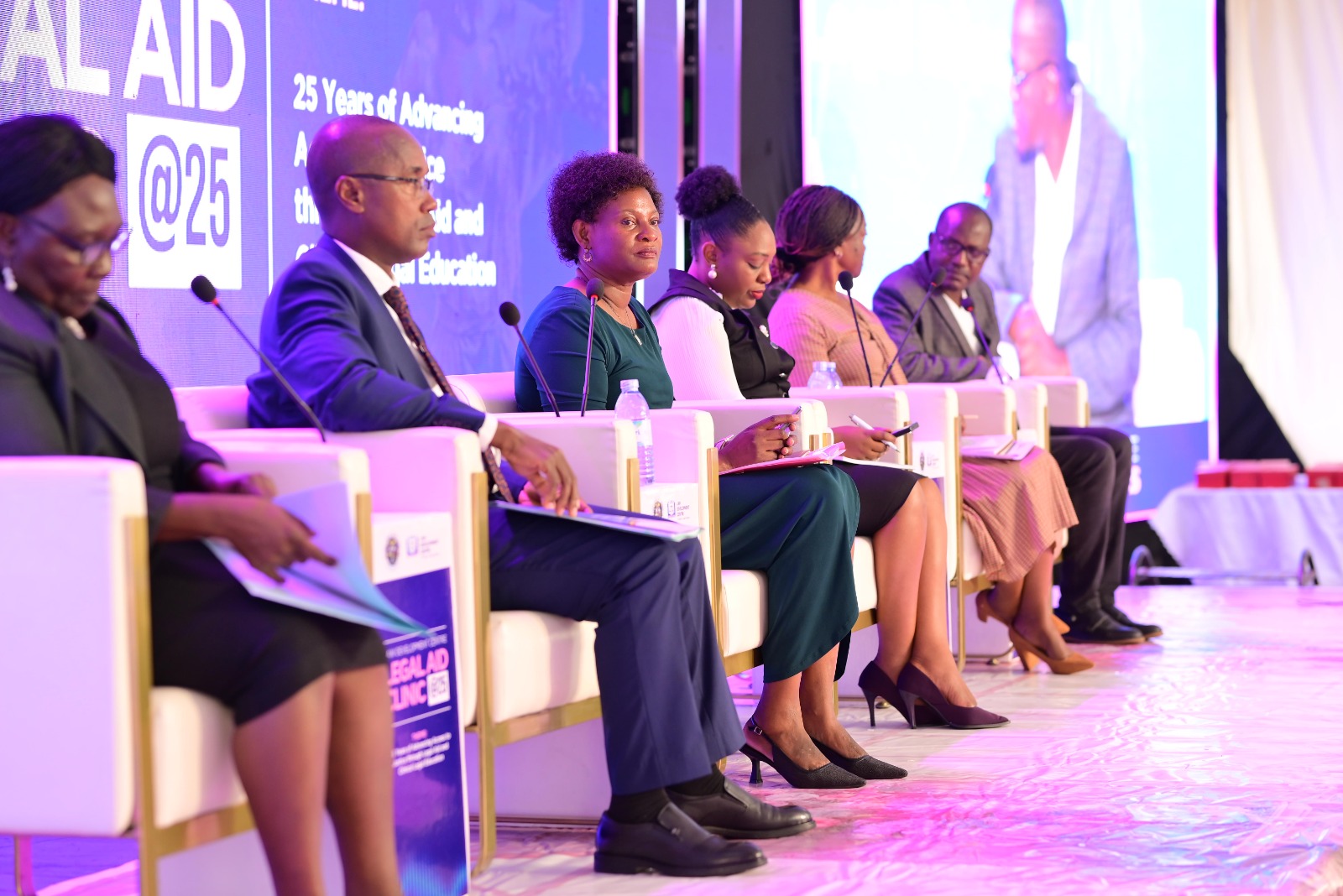
I applaud the Clinic for effectively partnering with various Government institutions, including the Ministry of Justice and Constitutional Affairs, Local Governments and the Judiciary, to fulfil its mandate.
I am also alive to the fact that there is a pending matter of the Private Members Bill on Legal Aid. Although Government of Uganda is committed to having more Legal Aid Clinics to enhance access to justice through the provision of legal aid to indigent and accused persons, we need to address its financial sustainability.
A sustainable Legal Aid System requires a combination of Government support, community engagement and innovative approaches to access to justice such as using ADR, Technology, etc.
Moving forward
Looking ahead, our collective focus should be on strengthening what works. We must continue to advocate for increased funding, greater use of technology among others. We must remain committed to providing early access to counsel and supporting the Clinic to reach the most remote areas.
I recognize that every Ugandan deserves timely quality legal support and every aspiring advocate deserves the chance to learn by serving. I applaud LAC for providing this opportunity.
I will continue to support the Legal Aid Clinic of the Law Development Centre in carrying out its mandate by giving it policy direction and assisting in mobilizing of resources through the Ministry of Finance, Planning and Economic Development to enable it carry out its mandate.
Legal Aid paves the way for justice. On this day lets salute those who provide essential services to protect our rights and dignity.

To the leadership of the Law Development Centre, the leadership and staff of the Legal Aid Clinic and students, thank you for your dedication. You have shown that justice can be both compassionate and effective.
Let us continue to carry this vision forward together, ensuring that wherever there is need, the hand of justice is never out of reach.
I thank you for your attention.
I say all this For God and My Country.
HON. KIRYOWA KIWANUKA
ATTORNEY GENERAL